MicroMod Asset Tracker Carrier Board Hookup Guide
Contributors:
 El Duderino,
  PaulZC
El Duderino, PaulZC 
Resources and Going Further
Now that you've successfully got your MicroMod Asset Tracker Carrier Board up and running with your Processor Board, it's time to incorporate it into your own tracking project! For more information, check out the resources below:
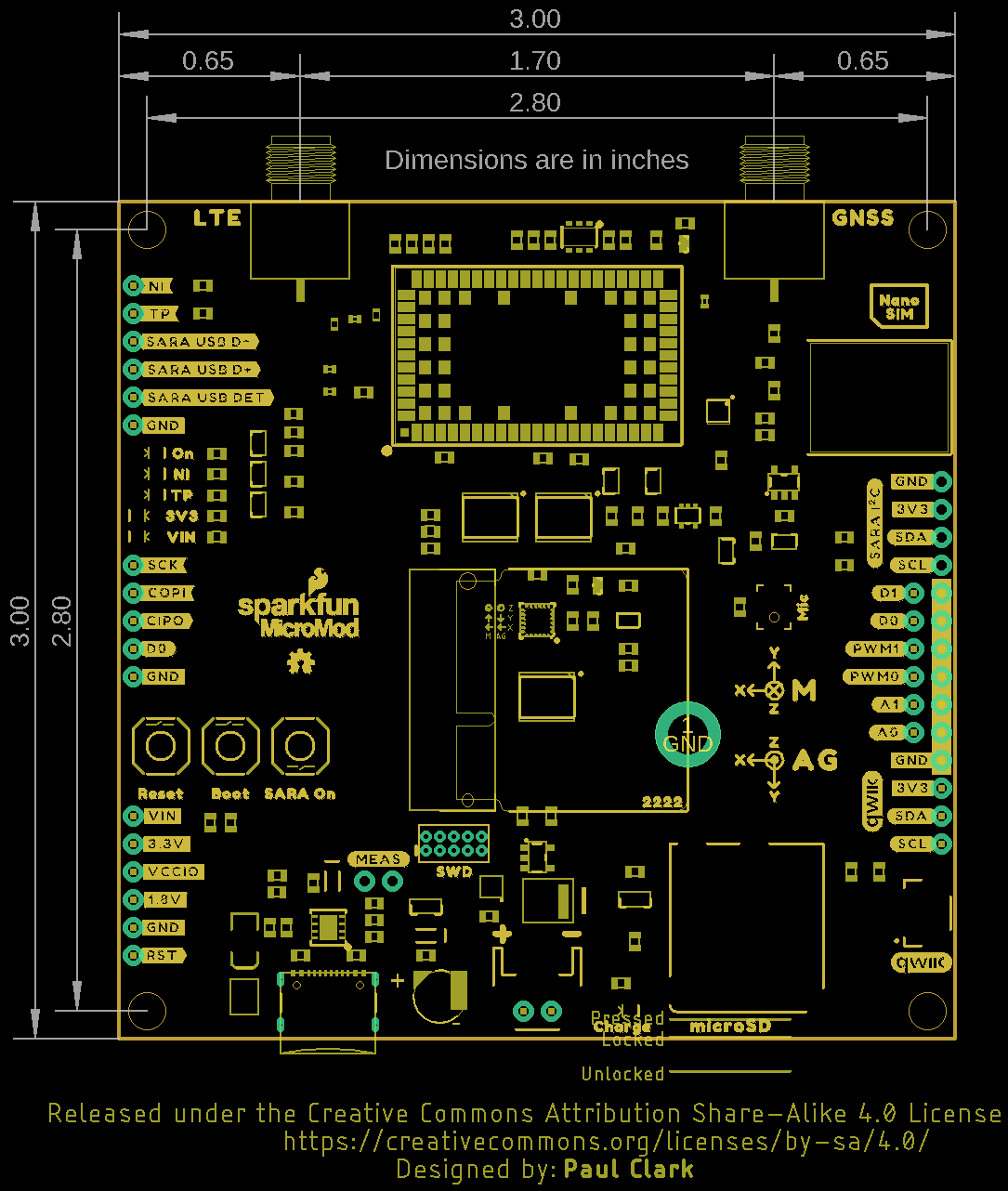
MicroMod Asset Tracker Carrier Documentation:
u-blox SARA-R5 LTE-M / NB-IoT module Documentation:
- Datasheet (PDF)
- AT Command Set (PDF)
- System Integration Manual (PDF)
- Application Development Guide (PDF)
- Internet Applications Development Guide (PDF)
- GNSS Integration App Note (PDF)
- Firmware Update App Note (PDF)
MicroMod Documentation:
Users looking to update the firmware on their Asset Tracker Carrier Board using the MicroMod Update Tool should read through our MicroMod Update Tool Hookup Guide:
MicroMod Update Tool Hookup Guide
Follow this guide to learn how to use the MicroMod Update Tool to interact directly with the UART on the MicroMod Asset Tracker's SARA-R5. Using this board you can talk directly to the module using u-blox's m-center software as well as update the firmware using EasyFlash.
Need some inspiration for your next project? Check out some of these related tutorials with MicroMod:
MicroMod GNSS Function Board - NEO-M9N Hookup Guide
The u-blox NEO-M9N is a powerful GPS unit that now comes populated on a MicroMod Function Board! In this tutorial, we will quickly get you set up using it with the MicroMod ecosystem and Arduino so that you can start reading the output.
MicroMod mikroBUS™ Carrier Board Hookup Guide
This carrier board takes advantage of the MicroMod, Qwiic, and the mikroBUS™ ecosystems and allows users to take advantage of the growing number of 7 MicroMod processor boards, 83 Qwiic (add-on) boards, and +1100 drop-in Click boards™, which equates to +51M different board combinations. Click to learn more.
MicroMod Ethernet Function Board - W5500 Hookup Guide
Add Ethernet and PoE capabilities to your MicroMod project using the Ethernet Function Board - W5500.
MicroMod Alorium Sno M2 Processor Board Hookup Guide
Get started with the MicroMod Alorium Sno M2 Processor Board!