Light-Emitting Diodes (LEDs)
Contributors:
 Nick Poole,
  bboyho
Nick Poole, bboyho Resources and Going Further
You've made it! You know, like, almost everything... about LEDs. Now go forth and put LEDs on whatever you please! And now... a dramatic reenactment of an LED without a current limiting resistor being over powered and burning itself out:
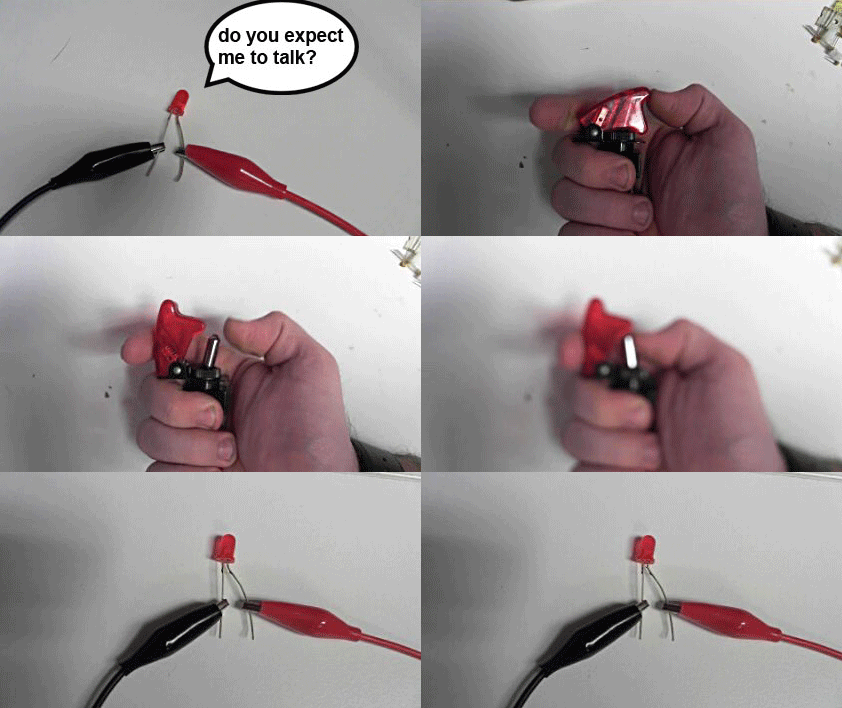
Yeah... it's not spectacular.
If you'd like to learn more about some LED related topics, visit these other tutorials:
Light
Light is a useful tool for the electrical engineer. Understanding how light relates to electronics is a fundamental skill for many projects.
IR Communication
This tutorial explains how common infrared (IR) communication works, as well as shows you how to set up a simple IR transmitter and receiver with an Arduino.
Das Blinken Top Hat
A top hat decked out with LED strips makes for a heck of a wedding gift.
How LEDs are Made
We take a tour of a LED manufacturer and learn how PTH 5mm LEDs are made for SparkFun.
Light-Up Valentine Cards
Light up your love with paper circuits - no soldering required!
PicoBuck Hookup Guide v12
The PicoBuck board is a high-efficiency three-channel constant-current LED driver.
Cherry MX Switch Breakout Hookup Guide
How to assemble and use the Cherry MX Switch Breakout, allowing you to turn a matrix of mechanical switches into a full-size keyboard!
3D Printed Illuminated Wand Prop
In this tutorial, we will learn about how to create a theatrical prop for a performance by 3D printing a wand and adding an LED.
Interested in learning more about LEDs?
See our LED page for everything you need to know to start using these components in your project.

Or check out some of these related blog posts: