Beginner Parts Kit Identification Guide
Contributors:
 jimblom,
  bboyho
jimblom, bboyho Resources and Going Further
Looking for other great essentials for your parts box or tools? Check out some of these other great kits and books!
SparkFun Discrete Semiconductor Kit
KIT-13682

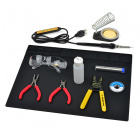
SparkFun Beginner Tool Kit
TOL-14681Need some inspiration to start prototyping? Try looking at the following tutorials for ideas!
Proto Pedal Example: Programmable Digital Pedal
Building a pedal around the Teensy 3.2 and Teensy Audio shield. Changing the effect in the pedal is as easy as uploading a new sketch!
SparkFun Qwiic Shield for Arduino Nano Hookup Guide
Hookup Guide for the SparkFun Qwiic Shield for Arduino Nano.
Temperature Sensor Comparison
A comparison of analog and digital temperature sensors. Which is better?
SparkFun Qwiic Shield for Teensy Hookup Guide
A short guide for assembling and using the SparkFun Qwiic Shield for Teensy and Qwiic Shield for Teensy Extended.
LED Light Bar Hookup
A quick overview of SparkFun's LED light bars, and some examples to show how to hook them up.
Boss Alarm
Build a Boss Alarm that alerts you of anyone walking into your office and automatically changes your computer screen.
SparkFun Inventor's Kit Experiment Guide - v4.0
The SparkFun Inventor's Kit (SIK) Experiment Guide contains all of the information needed to build all five projects, encompassing 16 circuits, in the latest version of the kit, v4.0a.
Or check out some of these blog posts for ideas:
Have a suggestion for how we can improve this guide? Steps missed? Instructions unclear? Please let us know. You can leave a comment below or contact us through our support team. Also, let us know if this is the most awesome assembly guide you've ever encountered and we'll stop trying to improve it.