SparkFun Air Quality Sensor - SGP30 (Qwiic) Hookup Guide
Contributors:
 El Duderino,
  Englandsaurus
El Duderino, Englandsaurus 
Resources and Going Further
That's all for this guide. Hopefully after reading this and following along with the Arduino examples you are ready to integrate your SparkFun Air Quality Sensor -SGP30 (Qwiic) into your next air quality monitoring project!
For more information, take a look at the resources below:
- Schematic (PDF)
- Eagle Files (ZIP)
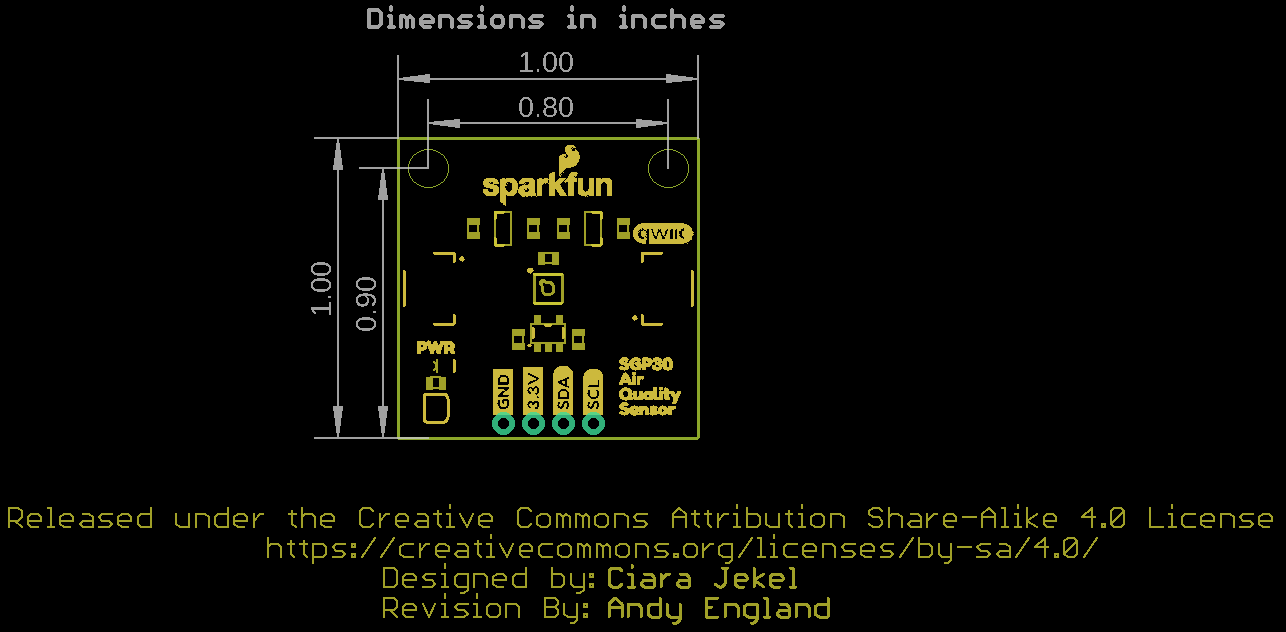
- Board Dimensions (PNG)
- Arduino Library GitHub Repository
- Hardware GitHub Repository
- SGP30 Datasheet
Looking to add more sensors to your indoor air quality project or simply want more weather and environmental-related tutorials? Check these out:
LED Cloud-Connected Cloud
Make an RGB colored cloud light! You can also control it from your phone, or hook up to the weather!
Hazardous Gas Monitor
Build a portable gas monitor to check for dangerous levels of hazardous gases.
TMP102 Digital Temperature Sensor Hookup Guide
How to connect and use the SparkFun Digital Temperature Sensor Breakout - TMP102 with an Arduino.
SparkFun AS3935 Lightning Detector Hookup Guide (v20)
Are you worried about the looming clouds in the distance, how far away is that storm exactly? Add lightning detection with the AS3935 to your next weather station or your next bike ride!
Not sure what type of air quality project you want to start? These blog posts might give you some inspiration: