SparkFun Qwiic Button Hookup Guide
Contributors:
 El Duderino
El Duderino 
Resources and Going Further
For more information, check out the resources below:
- Schematic (PDF)
- Eagle Files (ZIP)
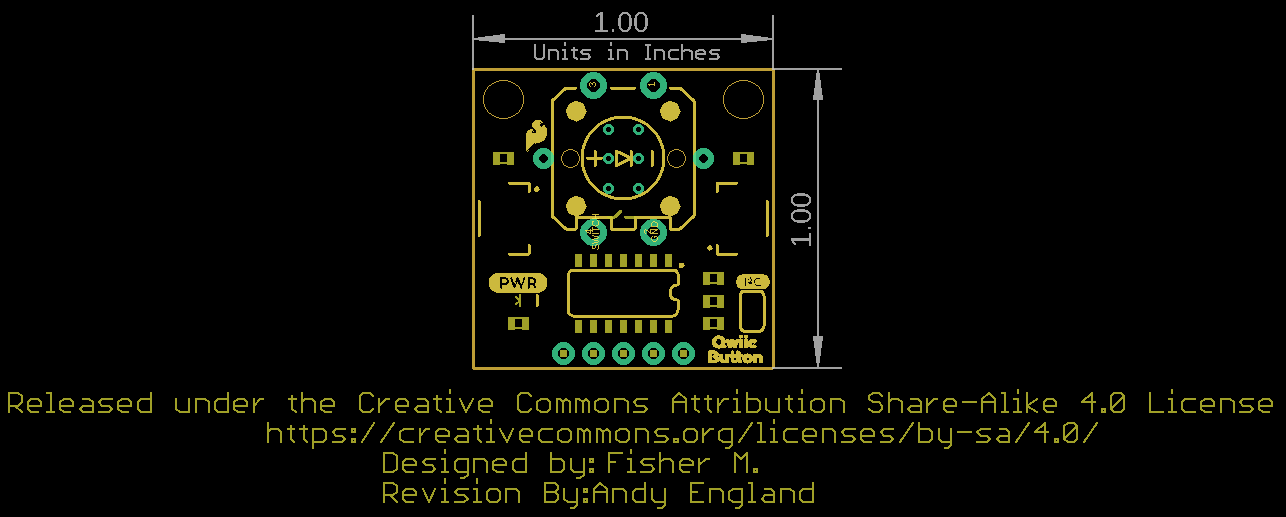
- Board Dimensions (PNG)
- Qwiic Button Arduino Library
- Qwiic Button Python Package
- GitHub Hardware Repo
- SFE Product Showcase
Need help getting started with Arduino and I2C? Check out these resources:
- Arduino I2C Scanner Example
- Arduino Wire Library Reference Page
- Arduino Wire Library (In-Depth) Reference
Looking for some inspiration for a project using the Qwiic Button? Check out this GPS Geo-Mapping project by Brandon J. Williams.
Before you go, here are some other tutorials using the Qwiic Connect System you may want to look through:
Qwiic HAT for Raspberry Pi Hookup Guide
Get started interfacing your Qwiic enabled boards with your Raspberry Pi. This Qwiic connects the I2C bus (GND, 3.3V, SDA, and SCL) on your Raspberry Pi to an array of Qwiic connectors.
Qwiic Magnetometer (MLX90393) Hookup Guide
Figure out how magnetic fields are oriented, all without having to solder a thing.
SparkFun SAMD21 Pro RF Hookup Guide
Using the super blazing, nay blinding, fast SAMD21 whipping clock cycles at 48MHz and the RFM96 module to connect to the Things Network (and other Radio woodles).
Build a Qwiic Jukebox that is Toddler Approved!
Follow this tutorial to build your own custom jukebox. Note, this is designed simple and tough for use primarily with toddlers. It's also a great introduction to SparkFun's Qwiic products!